

A missed call costs more than most SMEs realise. The lead goes cold, the competitor answers faster, and the sale disappears. But here's what's changing: European businesses combining AI phone assistants with automated WhatsApp follow-up are closing 34% more inbound enquiries. The reason is simple. WhatsApp messages get opened and answered almost immediately, keeping leads warm while staff focus on conversations that actually need a human touch.
The handoff gap: Why 67% of warm leads go cold after the first call
European SMEs are investing in AI phone coverage. That part is working. The problem comes after the call ends.
The handoff gap is what happens between a promising first conversation and the next point of contact. Most businesses have no structured follow-up system in place. A caller expresses interest at 6pm, but nobody reaches out until the next morning. By then, the lead has already moved on.
The 24 to 72 hour window after first contact is brutal. Prospects actively research, compare options, and talk to competitors during this time. According to research on AI phone assistants and their business applications, companies face growing pressure to maintain availability while skilled worker shortages limit capacity. The result? Warm leads drift away simply because nobody followed up fast enough.
Instant follow-ups keep momentum when prospects are hot. Delays of hours or days cause significant lead drop-off, especially for businesses generating hundreds of enquiries per day. The maths is straightforward: every hour without contact reduces conversion probability.
We're seeing smart businesses treat this as a complete stack rather than separate tools. Phone Call to Automated WhatsApp Follow-Up to CRM Action, all working as one connected system. The call captures interest, WhatsApp maintains temperature, and CRM actions ensure nothing falls through the cracks.

Step one: AI phone assistants capture every lead, any hour
The maths on missed calls is unforgiving. A prospect calling at 7pm on a Tuesday deserves the same attention as one calling at 10am. AI phone assistants make that possible without adding headcount.
- AI phone agents answer every call, 24/7, qualifying leads and gathering key information while staff are unavailable. The caller at 6pm gets the same quality interaction as the one at midday.
- Real-time call logging and CRM updates fix one of sales' biggest problems: bad data entered hours or days late with incomplete information. When the AI captures details during the conversation, nothing gets lost in translation.
- Skilled worker shortages and rising operating costs are hitting European SMEs hard. A virtual receptionist solution expands team capabilities without the recruitment headaches, meeting customer demands for greater availability.
- Every call captures caller intent, contact details, and urgency level. A price enquiry from a business owner gets flagged differently than a general information request. This context sets up the perfect handoff to WhatsApp automation.
- Staff return to a clean queue of qualified leads with complete context, rather than a list of missed calls and voicemails requiring callbacks.
We're seeing businesses treat the AI phone assistant as the first filter in their sales process. The technology handles volume and captures data. Humans step in where they add real value.
Step two: Automated WhatsApp sequences bridge the follow-up gap
WhatsApp messages get opened and responded to almost immediately. Emails sit unread for hours or days. That difference matters when a lead is actively comparing options.
- A typical sequence looks like this: instant acknowledgement after the call, morning brochure with booking link, afternoon qualification question, next-day reminder. Each touchpoint keeps the conversation moving without requiring staff involvement.
- Businesses struggling with too many customer inquiries are finding that WhatsApp AI assistants handle up to 80% of repetitive questions about pricing, availability, and booking processes. The volume that used to overwhelm teams now runs on autopilot.
- An AI WhatsApp chatbot maintains personalised, conversational engagement at scale. The prospect asking about pricing at 9pm gets the same quality response as one messaging at 2pm.
- Behaviour-based automation triggers messages based on customer actions. A website visit after the initial call prompts a different follow-up than radio silence. This creates customised buying experiences with transparent lead lifecycle tracking.
- Sales reps step in only when human judgement adds real value. The rest, qualification, scheduling, FAQ handling, runs without manual intervention.
The result? Warm leads stay warm. Staff focus on closing rather than chasing.
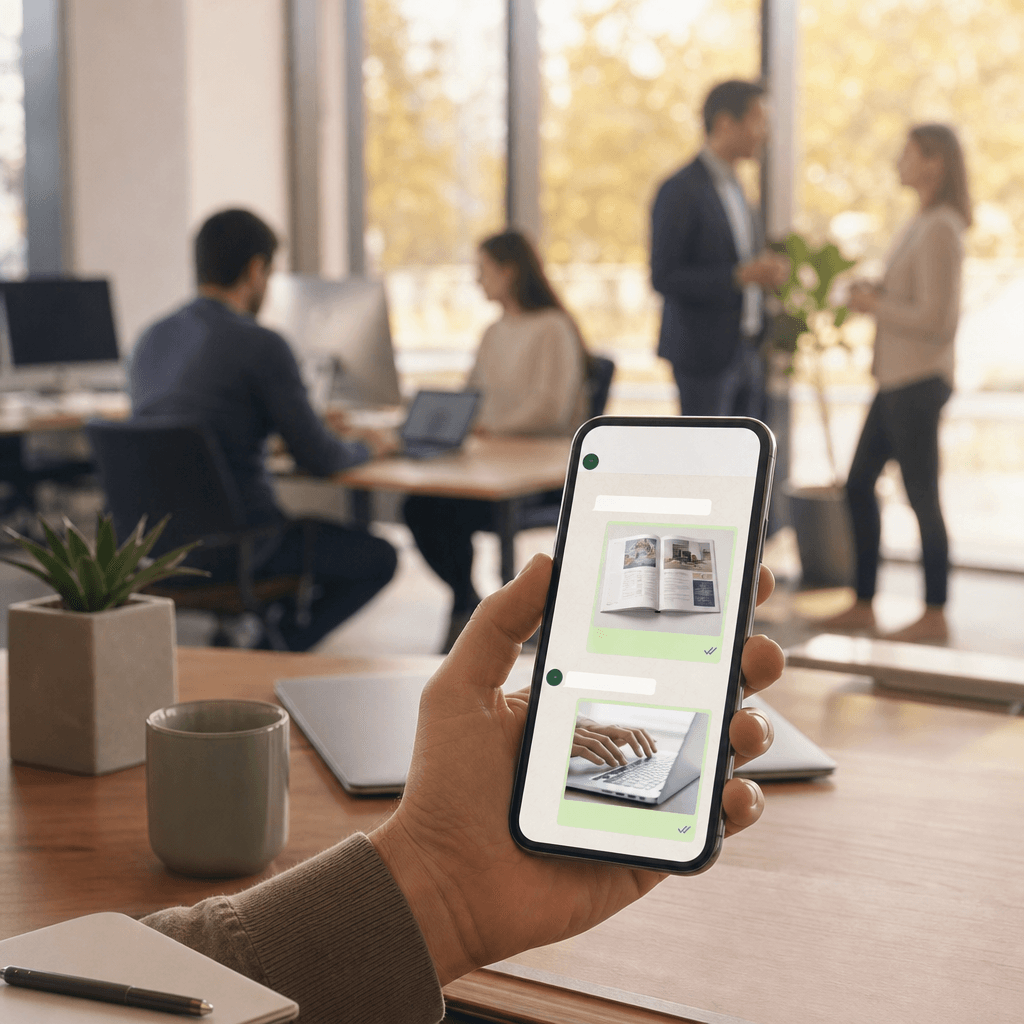
"The lead that called at 6pm books at 9pm, without a single manual follow-up."
Real scenario: From evening call to noon appointment in three touchpoints
Here's how the connected stack works in practice.
8:07pm: A prospect calls about commercial cleaning services. The AI phone assistant answers, qualifies the enquiry, captures company size and service requirements, and logs everything to the CRM instantly. The caller hangs up knowing someone will be in touch.
9:00am next morning: An automated WhatsApp message arrives. Personalised with the prospect's name and specific requirements from last night's call, it includes a service brochure and a calendar booking link. No human involvement yet.
11:14am: The prospect clicks the link and books a site assessment for Thursday afternoon. The CRM updates automatically with appointment status, assigned rep, and full conversation history. Businesses looking to streamline sales through WhatsApp CRM integration are seeing exactly this kind of conversion timeline.
Three touchpoints. Zero manual follow-up. Lead to appointment in under 16 hours.
Now consider the traditional approach. Receptionist arrives at 9am, checks voicemail, adds the callback to a list. Other priorities intervene. The return call happens at 2pm the following day. By then, the prospect has already booked with a competitor who responded faster.
The gap between these two scenarios is where revenue disappears. One business captured and converted the lead while the other was still checking messages.
CRM integration: The invisible layer that makes the stack work
The phone assistant captures the lead. WhatsApp keeps them warm. But without proper CRM integration, the data sits in separate silos and the handoff breaks down.
- Behaviour-based automation triggers the right message at the right moment. A prospect who visits the pricing page after their initial call receives different follow-up than one who goes quiet. Website visits, form submissions, booking link clicks. Each action updates the CRM and adjusts the sequence automatically.
- Real-time updates from both phone and WhatsApp channels create a single source of truth. Sales reps see the complete journey: what the caller asked, which messages they opened, how they responded. No more piecing together fragments from three different tools.
- Research shows 86% of buyers pay more for better customer experience. Accurate CRM data makes that personalisation possible. When a rep knows the prospect asked about commercial contracts on Tuesday evening and clicked the brochure Wednesday morning, the conversation starts in the right place.
- Businesses using WhatsApp CRM for customer support report fewer dropped leads and faster response times. The integration prevents double-outreach, conflicting messages, and the chaos that comes from disconnected systems.
- Transparent lead lifecycle tracking means nothing falls through the cracks. Every touchpoint logs automatically. Every status change reflects across the entire stack.
The CRM layer is invisible to prospects but essential to the outcome. Clean data in, qualified appointments out.
Implementation priorities for European SMEs
The 34% improvement in closed enquiries comes from the complete stack working together. Businesses seeing these results have phone, WhatsApp, and CRM operating as one connected system, not three separate tools bolted together.
- The highest-value gap determines where to focus first. Businesses losing leads after hours typically see faster ROI from AI phone coverage. Those answering calls but struggling with follow-up get more traction starting with WhatsApp automation. The diagnostic is simple: where are leads disappearing?
- GDPR compliance needs building into the flow from day one, not retrofitted later. European operations require consent capture during the initial call, clear data handling protocols, and opt-out mechanisms embedded in every WhatsApp sequence. AI solutions built for SMEs already have these frameworks in place for EU markets.
- The retention opportunity is often overlooked. With 61% of small business revenue coming from repeat customers, this stack works just as hard for existing client communication as new lead acquisition. Appointment reminders, service updates, and rebooking sequences all run through the same infrastructure.
- Phased rollouts tend to work better than big-bang implementations. Phone coverage first, then WhatsApp sequences for the highest-value lead types, then expansion across all enquiry categories.
European SMEs running the complete stack are capturing leads competitors miss and converting them faster.
See how the phone-to-WhatsApp stack works for your business. Request a personalised demo of the complete lead capture and follow-up workflow.