
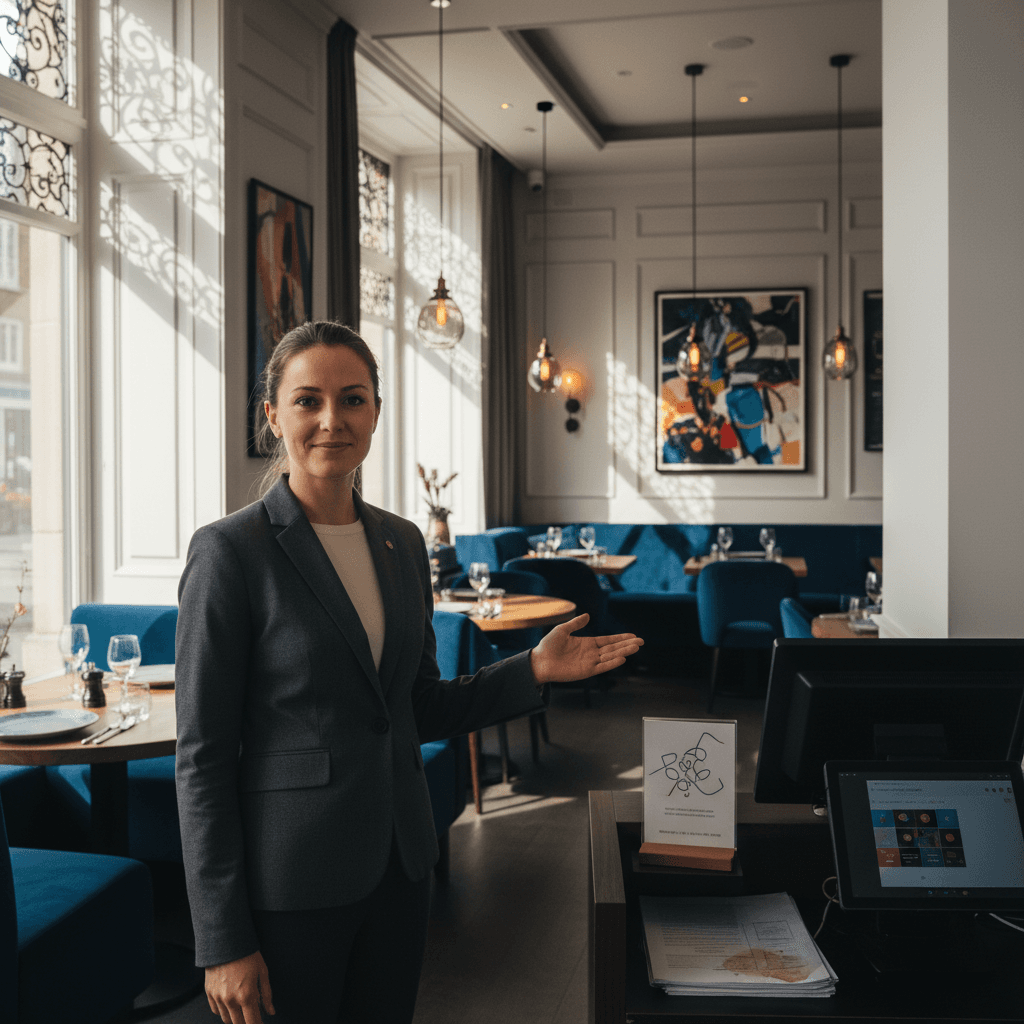
The maths is brutal. 42% of UK restaurants weren't profitable last year, food costs sit 35% above pre-pandemic levels, and staffing remains stuck at 20% below where it was before 2020. Something had to give. For more than a quarter of restaurant operators, that something is the phone. We're now seeing 26% of UK restaurants using AI tools, with phone automation emerging as the frontline solution to a staffing crisis that shows no signs of easing.
The uncomfortable math: £30K employees vs £300/month AI
The numbers tell a stark story. 42% of restaurant operators weren't profitable in 2025, squeezed between food costs sitting 35% above pre-pandemic levels and a staffing crisis that refuses to ease. Restaurant owners are doing what any business owner does when margins collapse: they're running the numbers on everything.
And one calculation keeps coming up.
A front-of-house employee costs roughly £30,000 per year. That same employee physically cannot answer the phone during Friday night service when the dining room is packed and the kitchen is firing on all burners. Meanwhile, AI phone systems run £200 to £400 per month and capture every single call, whether it comes at 2pm or 9pm on a Saturday.
Most operators making this switch aren't tech enthusiasts. They're not early adopters excited about the latest AI breakthrough. They're business owners doing survival arithmetic, weighing the cost of missed reservations against a monthly subscription fee. The reluctant adopter mindset dominates: "I don't love this, but the maths works."
The data backs up what we're seeing on the ground. 26% of restaurant operators now use AI-related tools, with phone automation emerging as the entry point for many. It solves an immediate, measurable problem without requiring a complete operational overhaul.
NRA: Over 25% of restaurant operators use AI
The hidden cost of missed calls during peak hours
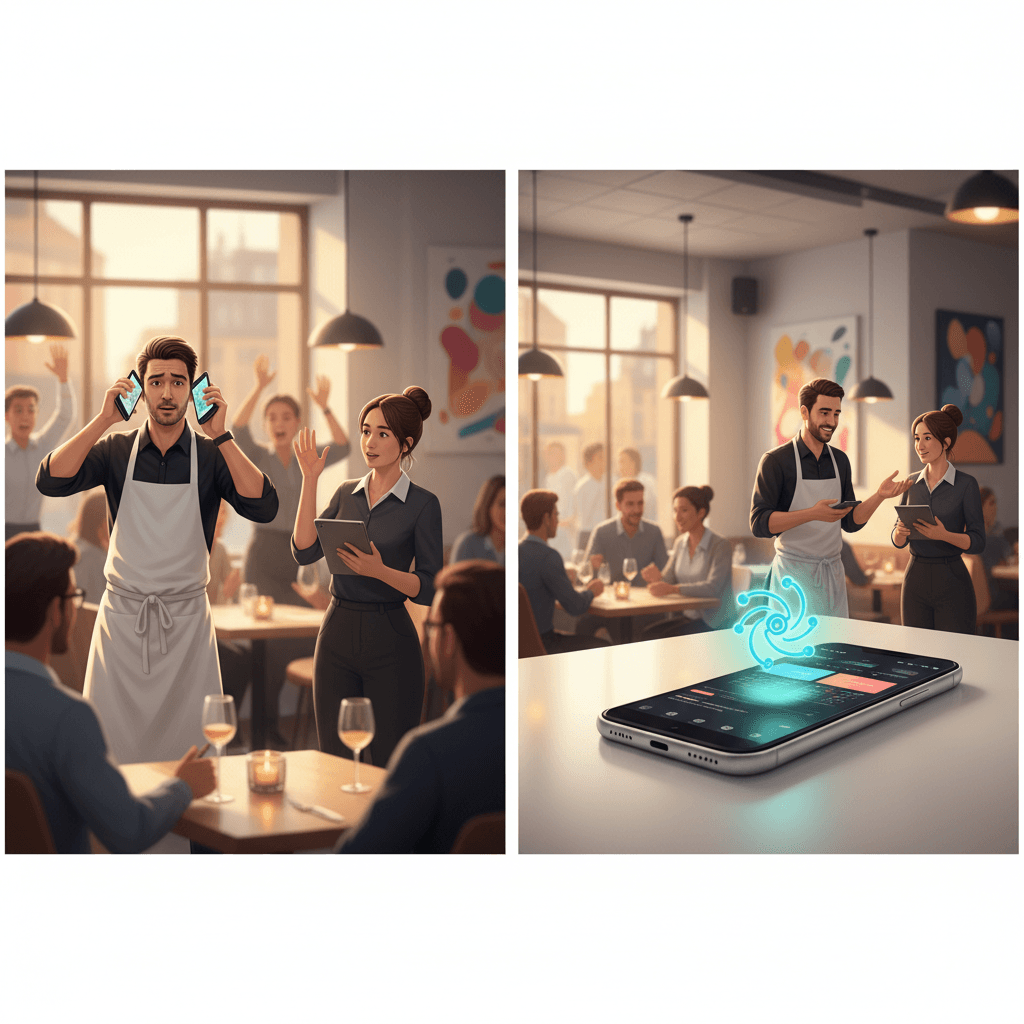
The phone rings during Friday night service. The host is seating a party of six, the bar is three-deep, and that call goes to voicemail. Or worse, it rings out entirely.
Nearly half of customers say they might not return to a restaurant if calls go unanswered. Each missed call represents £25 to £40 in lost revenue, and that's before accounting for the table that would have ordered wine, dessert, and coffee.
The maths gets worse. A typical front-of-house employee misses three to five calls per shift during peak hours. Across a week, that's potentially £500 to £800 in lost bookings walking straight to competitors who picked up.
Most restaurants are haemorrhaging revenue during their busiest hours, precisely when they're least equipped to answer the phone.
Traditional solutions don't work here. Hiring dedicated phone staff is economically impossible when margins are already razor-thin. Restaurants operating at 42% unprofitability rates can't justify another £30K salary for someone to answer calls.
An AI answering service captures 100% of calls, 24/7. That includes the post-10pm booking window most restaurants miss entirely, when customers are planning tomorrow's dinner after leaving tonight's venue. The after-hours calls often represent the highest-intent customers, people actively choosing where to spend money.
The phone doesn't care that service is slammed. Neither does AI.
Why hiring has fundamentally broken for UK restaurants
The staffing crisis isn't a temporary post-pandemic hangover. It's become structural.
-
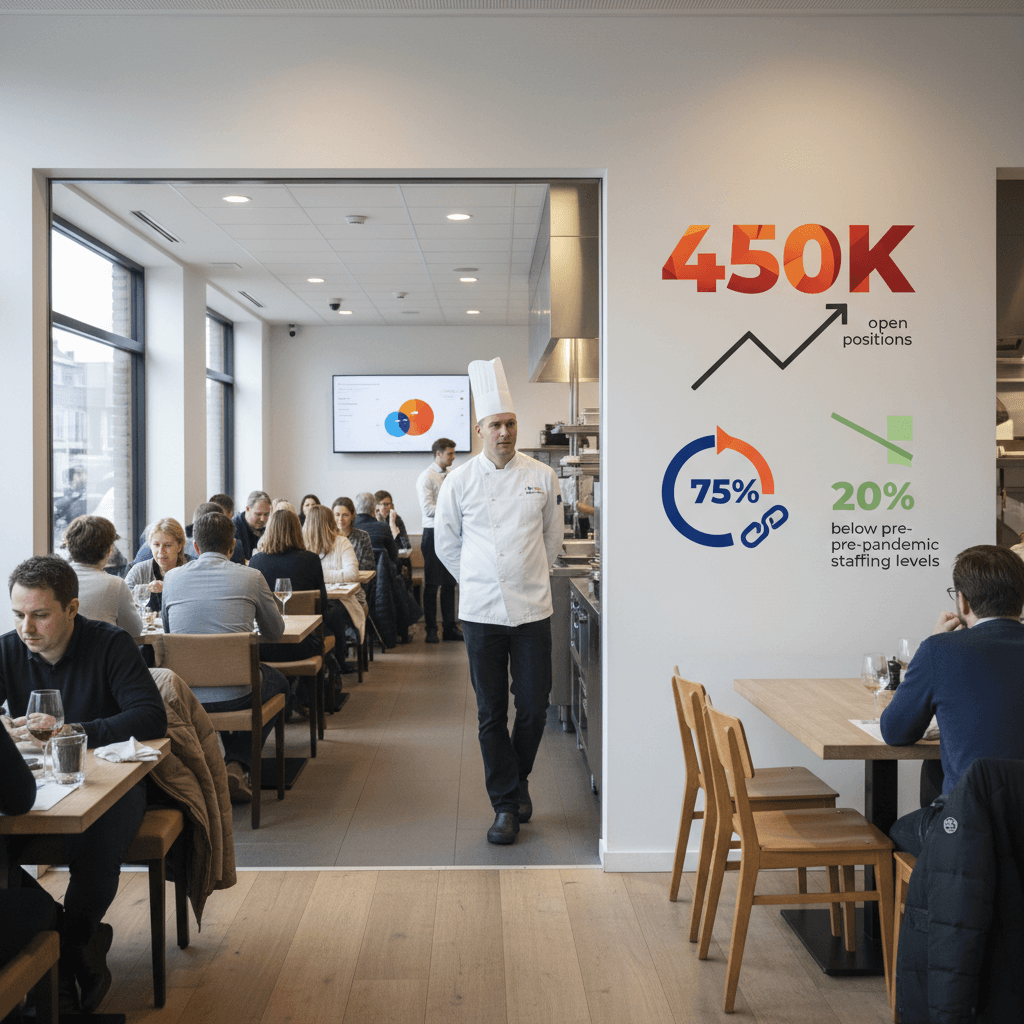
Staffing levels at full-service restaurants remain 20% lower than pre-pandemic numbers, with turnover rates averaging 75% annually. That means three out of four hires leave within a year. Meanwhile, approximately 450,000 positions sit unfilled across the sector.
-
UK operators face compounding pressures that other markets don't. National Insurance hikes and immigration reforms in 2025 have squeezed margins further, with more than 90% of operators citing labour costs as their most pressing challenge.
-
The vicious cycle is now entrenched. According to UK Restaurant Industry Predictions 2026, 60% of restaurant owners report labour shortages heading into this year. Yet with 42% unprofitability rates, competitive wages remain out of reach.
-
The gap between available workers and open positions keeps widening. Restaurants can't hire their way out of this, even if they wanted to.
AI phone systems aren't replacing willing workers. They're filling roles that literally cannot be staffed. When there's nobody available to answer calls during peak service, the choice becomes simple: automate that function or lose the revenue.
What the other 74% are doing instead
The majority of restaurants haven't touched AI phone systems. Their alternatives range from pragmatic to painful.
Some have cut opening hours, closing on traditionally slower days to reduce staffing needs. Others have gone online-only for bookings, pushing customers toward reservation platforms and hoping the phone stops ringing entirely. Many are simply absorbing the loss, watching revenue walk out the door with every missed call.
The hesitation makes sense. Hospitality is built on personal connection. Operators who've endured robotic IVR systems, the ones that trap customers in endless menu loops, understandably worry about subjecting their guests to something similar. Older demographics in particular remain sceptical, and the fear of customer backlash feels real.
There's also implementation uncertainty. Restaurant owners already stretched thin don't have bandwidth to troubleshoot new technology during a Friday night rush.
But the data is shifting perceptions. By mid-2025, about 15% of quick-service customers had experienced AI-driven ordering. Two-thirds rated it as good as or better than human interaction. That's a higher satisfaction rate than many operators expected. The restaurant technology trends emerging for 2026 suggest these numbers will only climb as systems improve.
A virtual receptionist today sounds nothing like the clunky automated menus of five years ago. The operators discovering this are finding that customers don't mind AI. They mind bad service. Those are different problems with different solutions.
The tipping point: When survival economics overrides hesitation
The 26% of restaurants using AI tools share a common origin story. Almost without exception, they tracked their missed calls for a week. The numbers did the rest.
These operators discovered patterns they couldn't unsee: 15 to 20 missed calls during a typical Friday service, after-hours booking requests going nowhere, revenue leaking out while they were too busy to notice. Once that data exists, it becomes impossible to ignore.
The QSR sector has accelerated acceptance. By mid-2025, 15% of quick-service customers had already used AI drive-thrus. Two-thirds rated the experience as good as or better than human service. That normalisation effect is filtering into full-service restaurants. Customers who order through AI at McDonald's don't flinch when a booking system picks up at their local bistro.
The operators who've made the switch didn't wake up one morning excited about AI. They ran out of alternatives.
2026 is pushing more restaurants toward that tipping point. Rising minimum wage, staffing shortages showing no improvement, and AI systems that sound genuinely natural, not robotic. The gap between hesitation and adoption is narrowing fast.
For operators still uncertain, the framework is straightforward. Track missed calls for 30 days. Calculate the revenue. Compare that figure against AI for restaurants pricing. The maths either works or it doesn't.
Serving Up 2026: Trends Shaping UK Foodservice - Orderly
Calculate how much revenue your restaurant loses to missed calls each week. Try Voicelabs free for 14 days and capture every booking opportunity, even during your busiest shifts.